
Invited Vision Talk · Efficiency
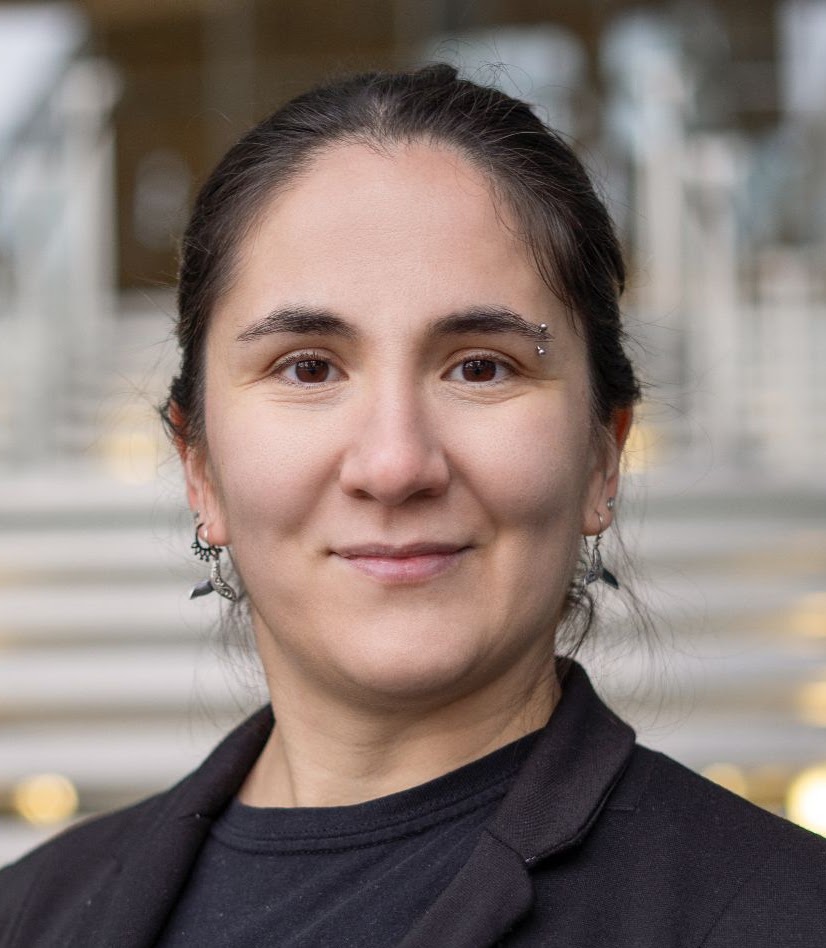
Rahim Entezari
Starting something new ... (ex-StabilityAI, ex-Wayve), UK
Foundations of Efficient Deep Learning
Towards predictive principles for efficient AI connecting deep learning theory, scaling laws, and efficiency
December 13, 2026
Recent advances in deep learning theory suggest that machine learning is gradually evolving from an empirical discipline into a predictive science. Scaling laws, optimization theory, learning dynamics, and representation learning increasingly explain why modern deep learning systems work. Yet these advances have had limited impact on one of today's most pressing challenges: building AI systems that are efficient under realistic constraints of compute, memory, energy, communication, and data. Current efficiency techniques, such as pruning, quantization, sparse computation, adaptive inference, and efficient architecture, remain largely driven by empirical investigation. Conversely, many theoretical advances explain observations only after the fact, rather than predicting which algorithms or architectures will be most effective before expensive experimentation.
The AXIOM Workshop brings together researchers from deep learning theory, machine learning systems, optimization, and efficient AI to explore a central question:
Can we develop predictive principles that guide the design of efficient AI systems?
Our goal is to bridge theory and practice by identifying the mathematical principles underlying efficient learning and by defining the next generation of research challenges for efficient deep learning. The workshop features invited vision talks, contributed papers, posters, panel discussions, and a community-driven Grand Challenges initiative that will collectively shape a research agenda for the foundations of efficient AI.
Invited Vision Talk · Efficiency
Starting something new ... (ex-StabilityAI, ex-Wayve), UK

Invited Vision Talk · Efficiency
Lamarr Institute and TU Dortmund, Germany

Invited Vision Talk · Efficiency
Lamarr Institute and TU Dortmund, Germany

Invited Vision Talk · Theory
CNRS & École Normale Supérieure, France

Invited Vision Talk · Theory
RWTH Aachen, Germany

Invited Vision Talk · Theory
Eindhoven University of Technology (TU/e), Netherlands
We welcome submissions addressing theoretical, algorithmic, and systems aspects of efficient deep learning, including but not limited to:
Interdisciplinary work connecting theory, algorithms, systems, and hardware is particularly encouraged.
We invite submissions presenting original research, preliminary results, novel ideas, and emerging research directions that advance the theoretical and practical foundations of efficient deep learning. We particularly encourage work that connects deep learning theory with efficient machine learning, including studies that improve our understanding of resource-efficient learning, reveal new theoretical principles, or bridge the gap between mathematical foundations and practical AI systems.
We invite short paper submissions (4 pages, excluding references) which follow the NeurIPS workshop formatting guidelines. This workshop is non-archival. Outstanding submissions will be invited for a 15-minute oral presentation. All accepted papers will be presented during the poster session and published on the workshop website. A Best Paper Award will be presented during the workshop.
Beyond research papers, AXIOM introduces a Grand Challenges track designed to identify the most important open questions for the future of efficient AI. Instead of reporting completed research, Grand Challenges submissions should articulate important unanswered questions, theoretical gaps, surprising empirical observations, or future research opportunities. We particularly encourage contributions on:
Accepted submissions will be published on the workshop website and synthesized into a community report that will serve as the starting point for an interactive discussion session during the workshop. The insights from this discussion will contribute to a community position paper outlining a research agenda for predictive and efficient AI.
Grand Challenges submissions should consist of a one-page abstract plus references, with no appendix. They will undergo a light review and accepted submissions will be published on the workshop webpage.
Submission site: OpenReview.
Submission format instructions:
Please use the NeurIPS 2026 LaTeX template. All papers will undergo peer review by the Program Committee.
Following the Guidance for NeurIPS Workshop Proposals 2026, workshop submissions must not duplicate work previously published at machine learning or related conferences. Work presented at the main NeurIPS conference must not also appear in the workshop, including as part of an invited talk. All authors, reviewers, presenters, and participants are expected to follow the NeurIPS Code of Conduct.
The workshop is intended to be an in-person interactive event. Accepted papers are therefore expected to be presented in person by at least one author or designated presenter. Remote oral presentations may be permitted only in exceptional circumstances (e.g., participation from another official NeurIPS location, visa or medical issues), subject to the workshop's technical constraints. If no presenter can attend in person, the paper will remain accepted but will be identified as "not presented" on the workshop website.
Times shown in CET
The workshop originates from the ELLIS Mathematics and Efficiency of Deep Learning Reading Group.

Graz University of Technology, Austria
TU Dortmund and RC Trust, Germany

Graz University of Technology, Austria

University College London, UK

EPFL Lausanne, Switzerland



For questions or further information regarding the workshop, please contact the organizing committee: axiom.neurips2026@gmail.com